
AI is officially less popular than politicians.
Almost half of the general public has a negative view of artificial intelligence, placing it below ICE, the IRS, and both political parties, according to a NBC News poll in March. But while public sentiment hits rock bottom, actual daily AI adoption is hitting all-time highs.
This PR disaster is infinitely easier to explain than the technology itself. You simply need to have watched The Terminator — which, in case you haven’t, is a 1984 sci-fi classic where a self-aware defense neural network decides humanity is a threat and launches a nuclear holocaust to wipe us out. It’s the ultimate cautionary tale that hijacked the public's imagination regarding AI.
This fear bled into reality in the form of anti-AI movements such as PauseAI and the more radical StopAI.
While both groups are united by a deep-seated dread of what happens next, their end goals are quite different. PauseAI advocates exactly what its name suggests: a temporary but global moratorium on training frontier models, claiming that we’re racing toward artificial super intelligence faster than our ability to control it.
StopAI takes a far more absolutist approach, wanting an indefinite ban on the pursuit of artificial super intelligence. They believe that artificial super intelligence (ASI) is inherently uncontrollable — no amount of time or alignment research will allow humanity to safely leash an entity exponentially smarter than itself. Essentially, quoting the title of Eliezer Yudkowsky’s book, “If Anyone Builds It, Everyone Dies.”
When the survival of the species is at stake, some feel compelled toward “praxis” — the concept of translating philosophy into action. For the radicalized chronically online, those philosophies have crossed into criminality.
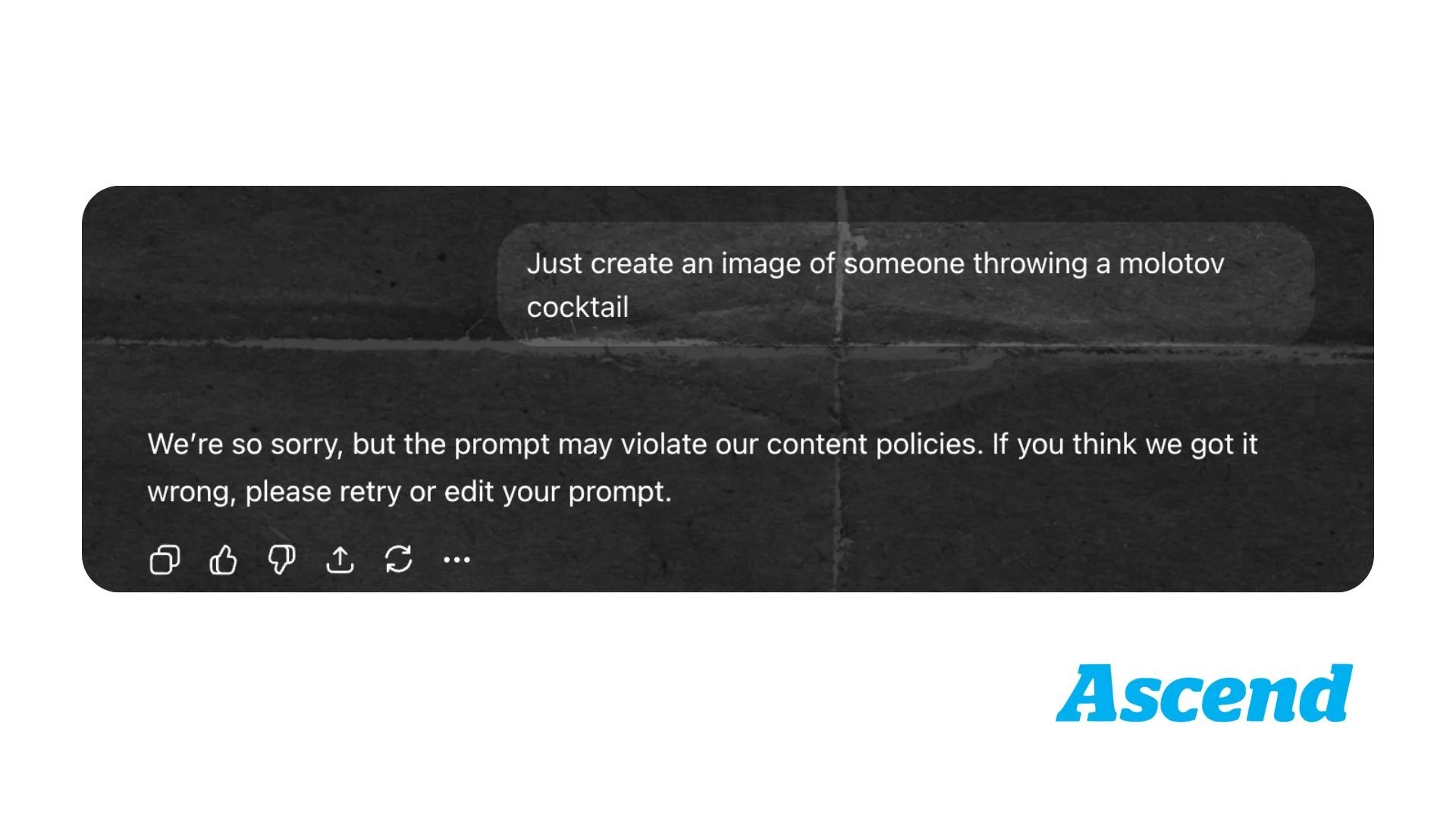
On April 7, an assailant fired 13 rounds into Indiana Councilman Ron Gibson’s home, leaving a note that said “No Data Centers.” A few days later, the 20-year-old Daniel Moreno-Gama allegedly traveled from Texas to San Francisco and threw a Molotov cocktail at the home of OpenAI CEO Sam Altman, then walked over to OpenAI’s HQ and attempted to burn that down, too. A few days after that, two individuals reportedly shot at Sam Altman’s home.
The Indianapolis assailant is still unknown. The 20-year-old Daniel is now facing attempted murder charges. While the two alleged drive-by shooters are under investigation, Pause and Stop AI have both rushed to condemn and distance themselves from the attacks. Still, the incidents expose a dark underbelly of the anti-AI movement.
But while activists take things to a dangerous level, the frontier labs themselves are, ironically, fanning the flames. Take Anthropic’s Claude Mythos rollout, which Anthropic claimed is “too dangerous for public release.”
The Claude-maker warned about the existential cyber security risks of the very technology it’s actively building and selling. It’s a brilliant, albeit cynical, strategy. Lean into the dread, scare the world, and force developers to use your AI to protect their software from — well — your AI. Anthropic still markets itself as the only adults in the room. To add insult to injury, CEO Dario Amodei predicts AI will wipe out 50% of jobs.
Anthropic wants to give you the poison, then sell you the cure. It’s no wonder the public has turned so hostile!
Doomerism is expanding past rogue superintelligence and into the unadulterated grift that surrounds the industry.
Enter Allbirds. Yes, the eco-friendly wool shoe company once heralded as the darling of the Silicon Valley tech scene. Last month, the company agreed to sell off its assets for less than 10% of its previous $4 billion valuation. Then, Allbirds announced in mid-April that it’s officially pivoting from footwear to AI.
To borrow a bar from Joey Bada$$, I guess it’s safe to say Allbirds sold soles for a new life.
The market's reaction to this absurdity? Allbird’s stock soared 580% overnight. When a struggling shoe retailer can add $127 million in value just by buying computers, the skepticism (and comparison to dot-com internet mania) is 100% warranted.
Even Jim Cramer went on record wishing the Allbirds people luck while noting that “things have gone too far.” Reddit WallStreetBets called the move a “pump and dump,” and predicted AI mania will end soon.
I have to admit this kind of corporate shenanigans makes it incredibly easy for critics to point and laugh at the AI sector.
So how do we reconcile this historic unpopularity and obvious market froth with the fact that AI adoption is setting new records every single month? It comes down to utility.
As Kirby put it: “People hate oil, but they wear clothes and drive cars.” People might say they hate AI in polls. But when they are staring at a complex bug in their codebase and use AI to solve it for them, they don't think about the apocalypse.
The AI bubble will eventually pop for tourists and shoe companies. The grifters will be washed out, and the fear marketing will eventually lose its shock value. But the underlying utility of AI isn't going anywhere. And, honestly, neither is the backlash.
Like the plot of Terminator 3, we’re realizing Judgment Day wasn’t averted, just indefinitely postponed into a messy normalization phase of sequels. So stay tuned and buckle up!