By: Thomas Stahura
So, it was just last month when I talked about Sora 2. But we need to talk about it again.
I’ll admit Sora was fun… for about 72 hours. (Sam Altman celebrated with a Pikachu steak.)
Then OpenAI hit the brakes.
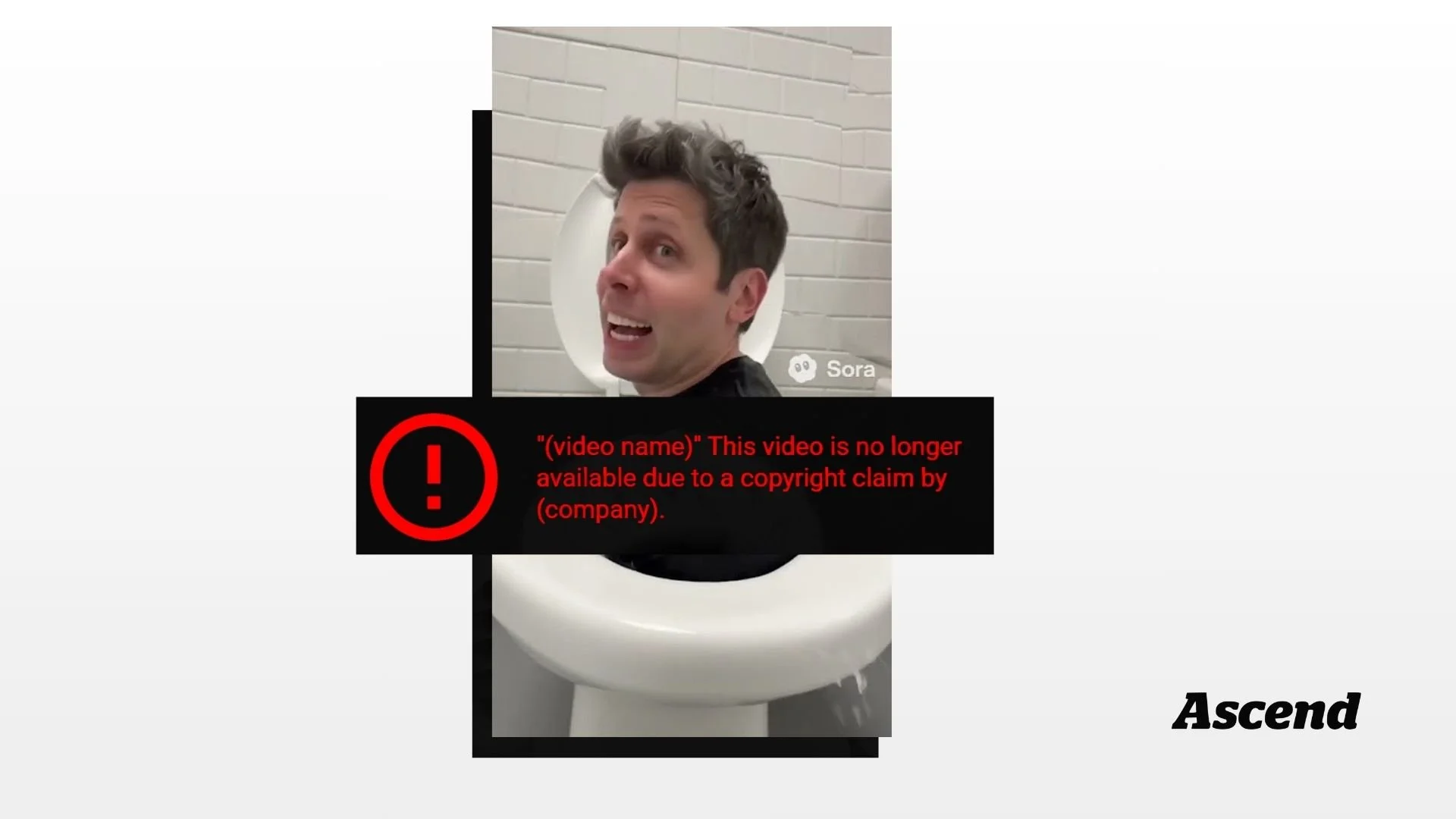
No Sora didn't start running ads. They also didn't kill free generations or change usage caps. Instead they just quietly banned everything that made the app interesting. Rick and Morty, SpongeBob, MLK, and all Disney characters are banned. Even vaguely copyrighted stuff now triggers content policy warnings.
This has to be the fastest rate of enshittification I've ever witnessed. And the wild part is it's not even OpenAI's fault, at least not in the technical sense. The model is still incredible and the compute is there.
Copyright law is what’s killing the magic of generative media, and Sora is the canary in the coal mine.
OpenAI is scrambling to cut licensing deals with studios, networks, and IP holders. The pitch is straightforward: let us train on your content, let users generate stuff in your style, and we'll figure out some revenue-share arrangement. The problem is brands want control almost as much as they want cash. They also want approval rights over anything that touches their IP. They want to make sure Mickey Mouse isn't doing anything NSFW. And OpenAI has no revenue to share from Sora anyway since generations are still free.
So for now, the only solution is the nuclear option. Ban everything remotely copyrighted and hope the legal team can negotiate their way out. The problem is they're negotiating from a weaker position. Disney can wait. Warner Bros can wait. They've got profitable businesses and zero urgency to license their IP to a company that can't even charge for generations yet. Meanwhile, OpenAI is burning through hundreds of millions in compute costs with a clock ticking louder every quarter.
Thanks to Microsoft's 27% stake in OpenAI, we can peek behind the curtain through SEC filings. Microsoft's Q1 fiscal year 2026 earnings report (covering the quarter ending September 30, 2025) revealed a $4.1 billion pre-tax loss on its OpenAI investments. Which is a five-fold increase from last year’s report.
Microsoft started mentioning OpenAI losses buried under "Other Income, Net" with vague language about losses "primarily" coming from OpenAI. Only now, a year later, can we see that "primarily" meant almost all of it. And the trend is getting worse, not better.
So what does this mean for the future?
OpenAI isn’t going anywhere and neither is the intellectual property issue. If anything, it's going to get worse as more lawsuits pile up and more IP holders demand control. Generative video hit the mainstream faster than the legal frameworks to handle it. Every frontier lab is going to face this same wall. OpenAI just hit it first because they shipped publicly.
The business model, at least its consumer approach, is broken. OpenAI is hemorrhaging cash on compute and cloud resources, generating zero revenue from Sora, and now it neutered the product so aggressively that user growth is stalling. The hype cycle that carried Sora 2 diminished, replaced by users memeing on Sora's content violation policy.
The IP holders will eventually have to come to an agreement with the AI labs. Afterall, they both face the same pressure from open source, which will continue to train on and produce copyrighted content regardless of the legal cases. This will happen in the same way music labels partnered with streaming services due to the threat of “free” music piracy like Napster.
For startups in this space, you either need to build on fully licensed/public domain content, or run open source models like Wan-2.2 14b. Though if you take the latter route, you will need a legal war chest bigger than your compute budget.
The irony is Sora 2 is still an incredible model. But none of that matters if you can't actually let users generate the content they want without getting sued into oblivion. This drama is sure to continue in 2026, so stay tuned!