
By: Nate Bek & Ben Eisinger
Lake Union is a small lake that tells a big story.
Gouged out by the Vashon glacier some 12,000 years ago and filled with meltwater, it later became crowded with shipyards, then hundreds of houseboats. Just 580 acres, the lake is home to both the oldest wooden tugboat in the world and a warehouse that'll soon build autonomous drone boats for the US military. Boeing's first airplane, a spruce-and-linen seaplane, lifted off from these waters in 1916. A century later, a stargazer at Gas Works Park can watch Redmond-built Starlink satellites streak across the night sky.
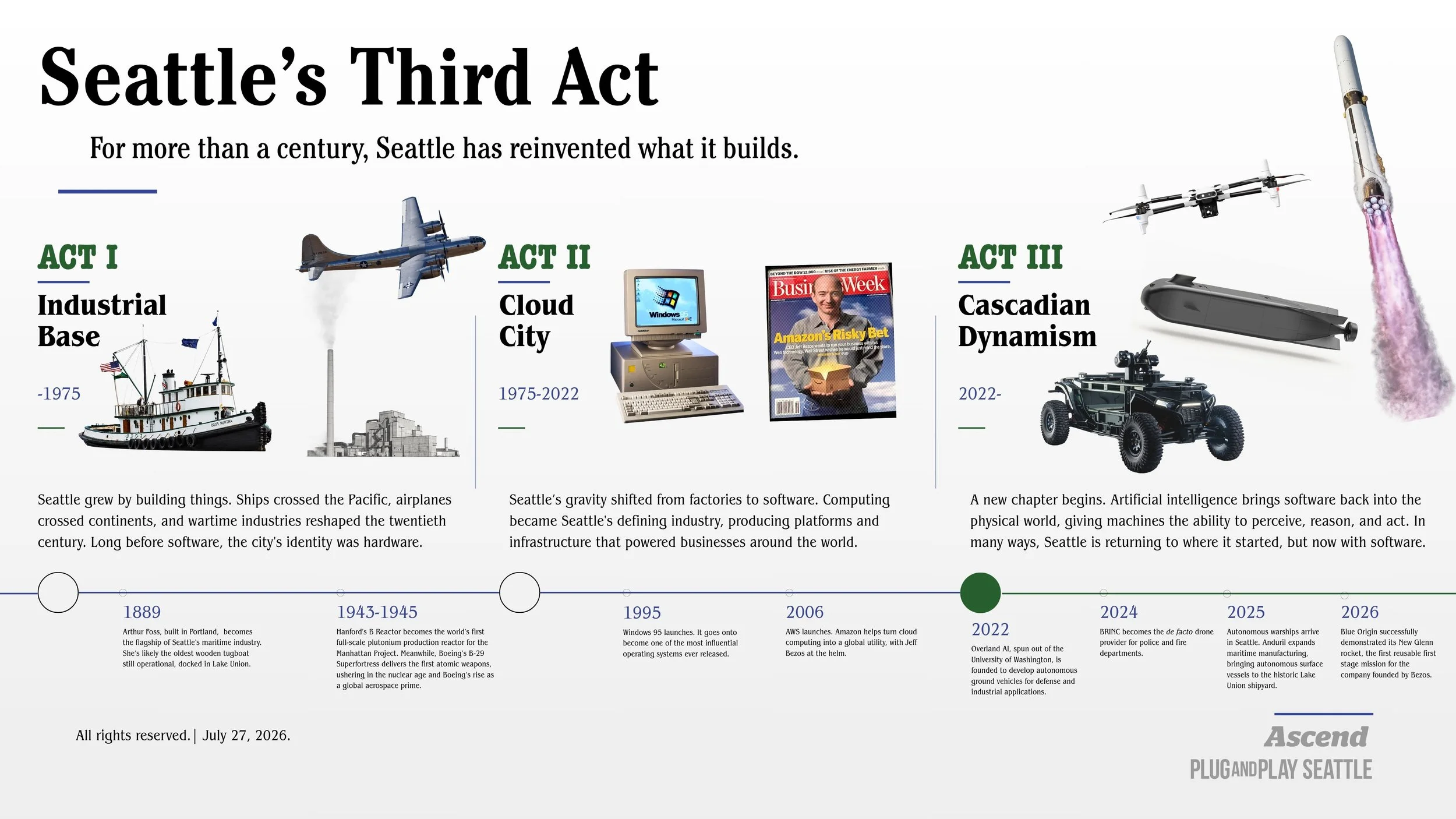
For all that progress, Seattle’s oldest industries are still very much open for business. Each new industrial age grows outward like rings on a tree, without replacing the one before it. On Lake Union’s banks, physical AI startups share buildings with family-owned maritime firms, and software engineers commute to work by seaplane.
For the past few months we’d been developing a thesis about where Seattle’s tech economy is headed. It goes like this: Act I was maritime and aerospace. Act II was cloud computing and enterprise software. Act III is the baby of the two, intelligent machines built from software-enabled hardware.
At some point, though, you have to leave the office and see it for yourself. So we did, from two rented kayaks on Lake Union, which turned out to be the ideal place to test it.
On a warm June afternoon, we slid into the water beneath the Aurora Bridge. The plan was a loop — up the east side, around the top of the lake, back down through the middle, then west along the Ship Canal. A tour, we told ourselves, of three Seattles.
The first company we floated past was the Fremont Tugboat Company. And across the water in Eastlake we spotted Lake Union Dry Dock, or LUDD, one of the oldest continuously operating shipyards in the country, which has been hammering on hulls since 1919. This is the old lake, and it is very much alive and well.
After rounding Gas Works Park, we trained our kayaks east, towards the future.
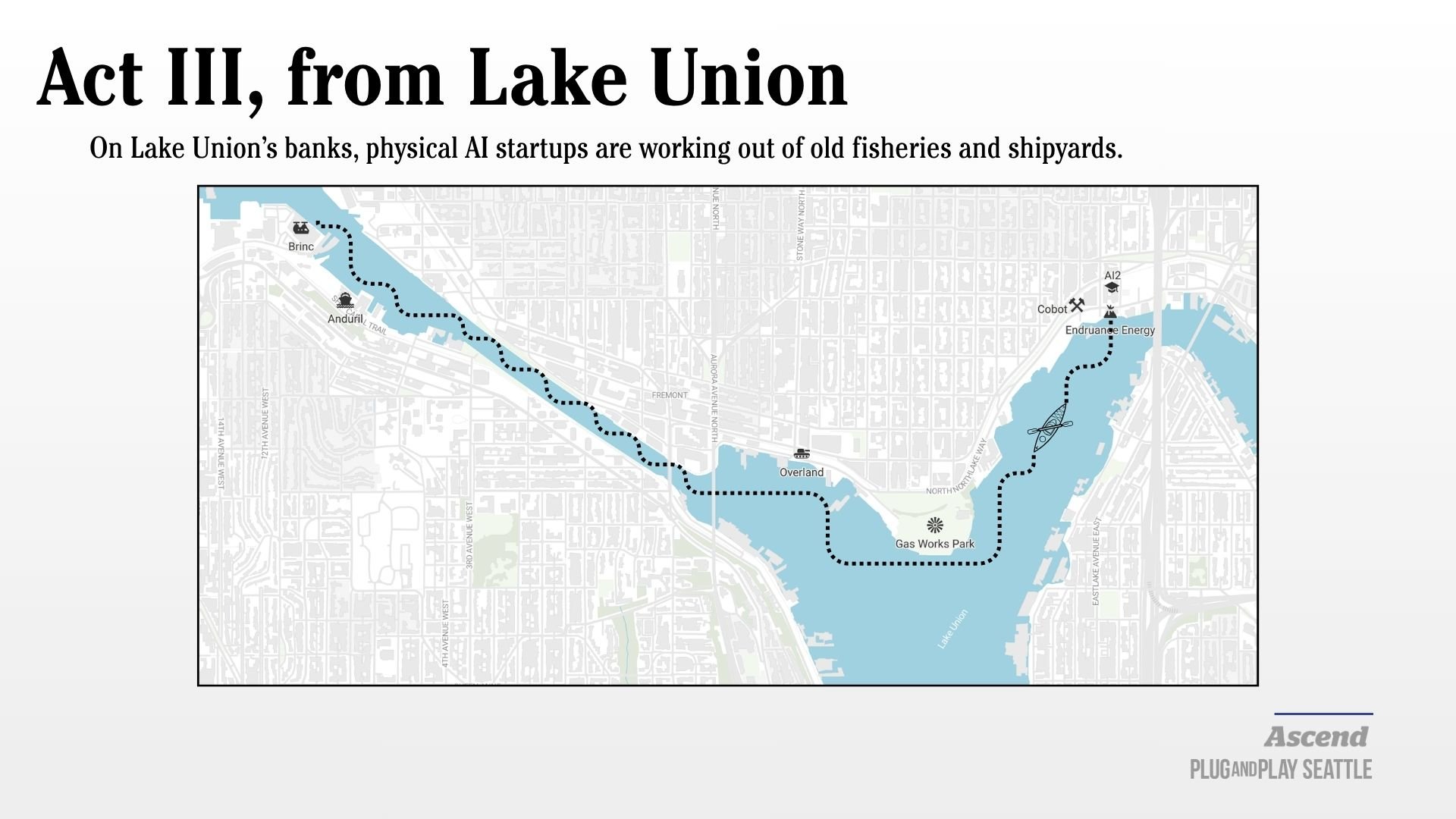
The plan was a loop — up the east side, around the top of the lake, back down through the middle, then west along the Ship Canal. A tour, we told ourselves, of three Seattles.
The first stop on our tour was the dock of Endurance Energy, a Seattle-based subsea geothermal startup founded just last year. Endurance’s office is a converted fishery, and its dock is still home to a retired fishing boat destined for the scrapyards. Just feet away, a team of former rocket engineers are designing a first-of-its-kind power plant to siphon energy from mile-deep hydrothermal vent fields. This fall, the team plans to deploy a 100-kilowatt generator, Adelie, to the Juan de Fuca ridge off the Oregon coast.
Aditi Bhatt, the company’s Chief of Staff, came out to greet us. We asked her to take our photo and doubled back in the direction of the Fremont Ship Canal.
Behind Endurance sits AI2, the nonprofit institute Paul Allen founded to push AI research into the open. Next door is Cobot, where Amazon’s former robotics chief is building robots meant to work alongside people, and next to that is Dunn Lumber.
Returning to Gas Works park, we found ourselves in the middle of one of Seattle’s so-called float raves, a loose archipelago of inflatable flamingos, pontoon boats, and paddle boards lashed together around a barge with a DJ and projector. On the lake, at that moment, the vibes couldn’t be better.
Touching grass — or water in this case — was part of the reason we felt we needed to leave the office. Across the national press, Twitter, you name it, the story about Seattle in 2026 isn’t necessarily a positive one. Downtown office towers sit mostly empty, while sweeping layoffs culled tens of thousands from the workforce. Policymakers fought employers over a head tax and won, then lost, then passed another one. And Starbucks, the hometown company, is leaving the hometown.
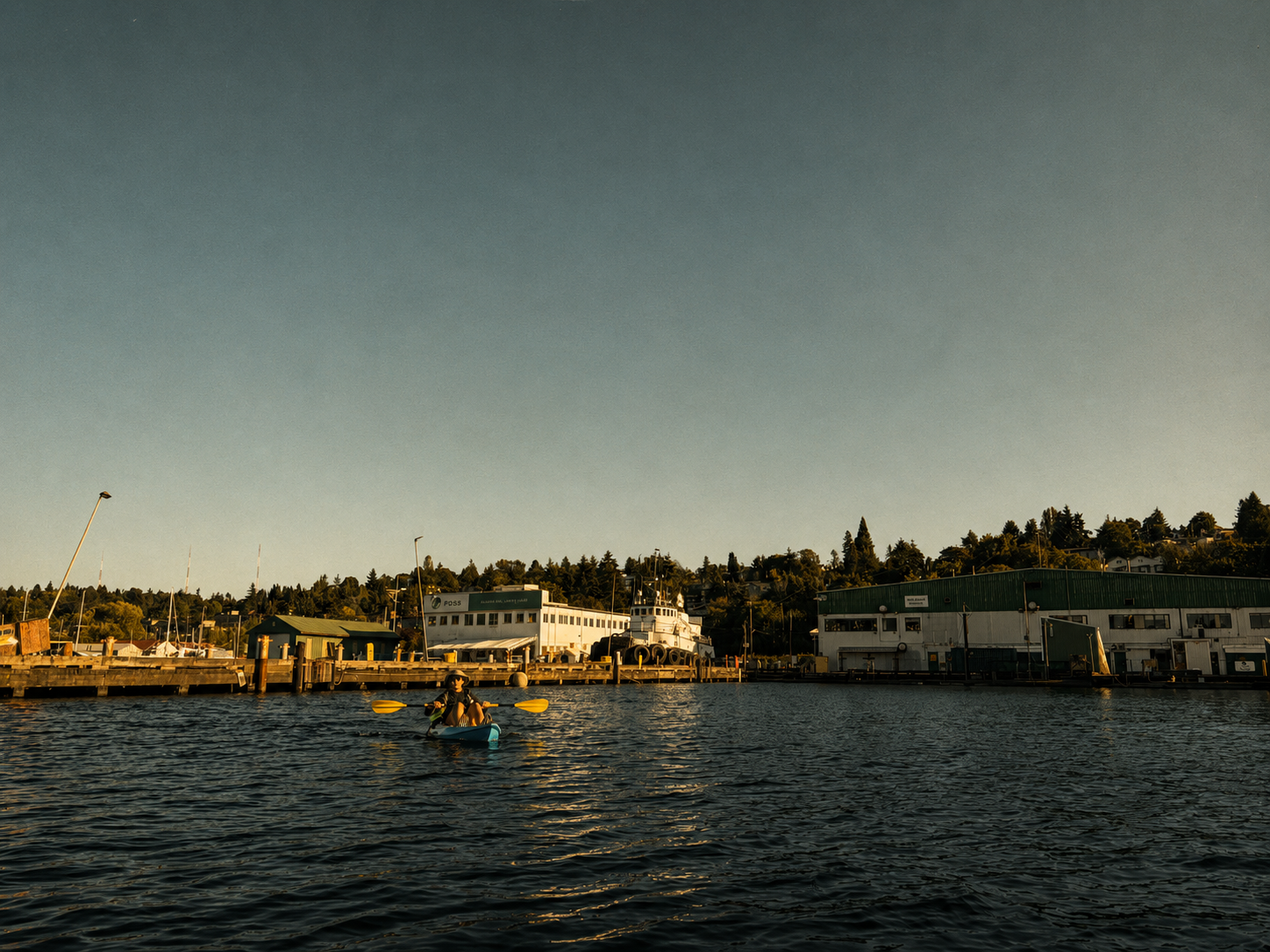
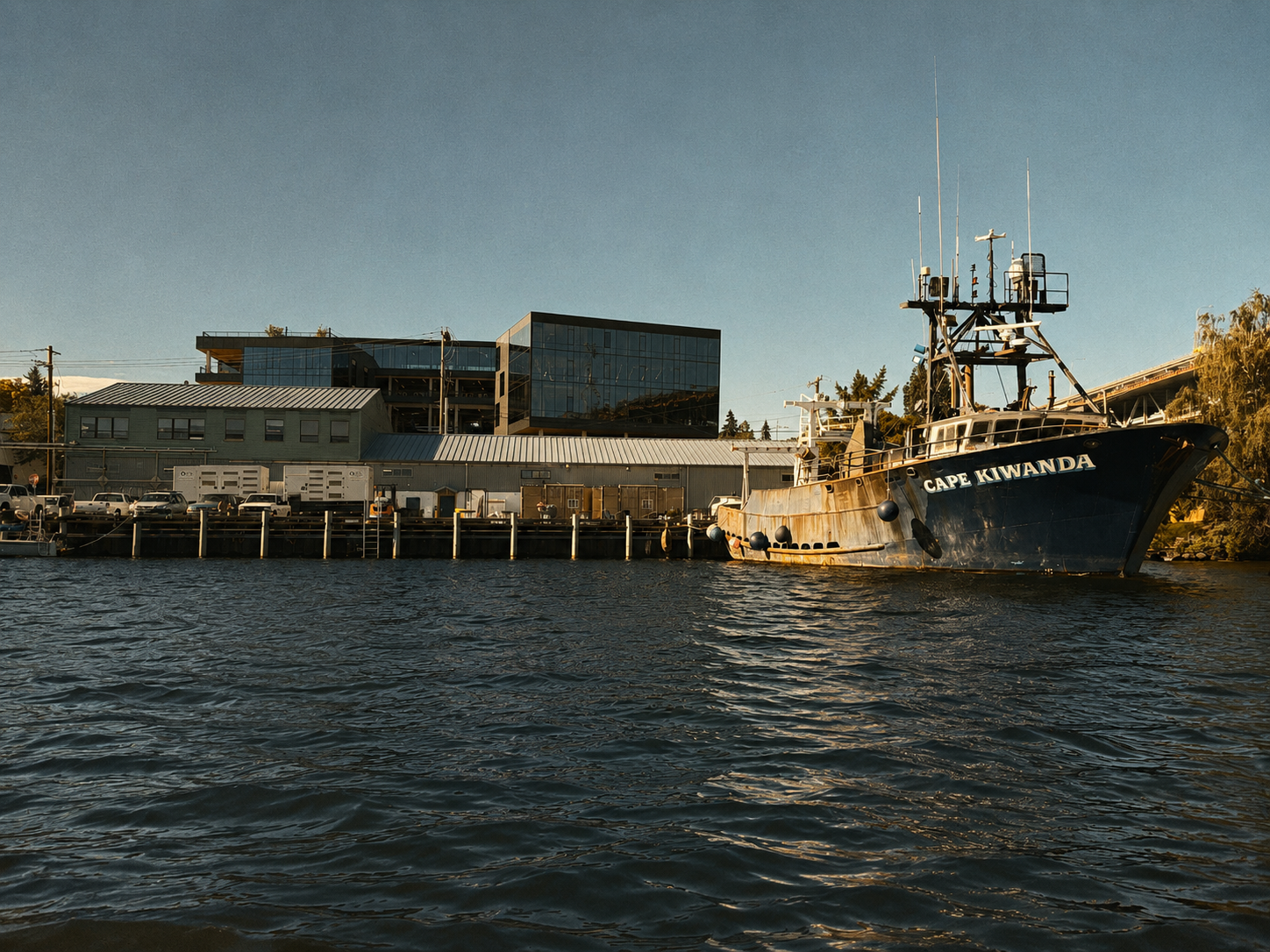
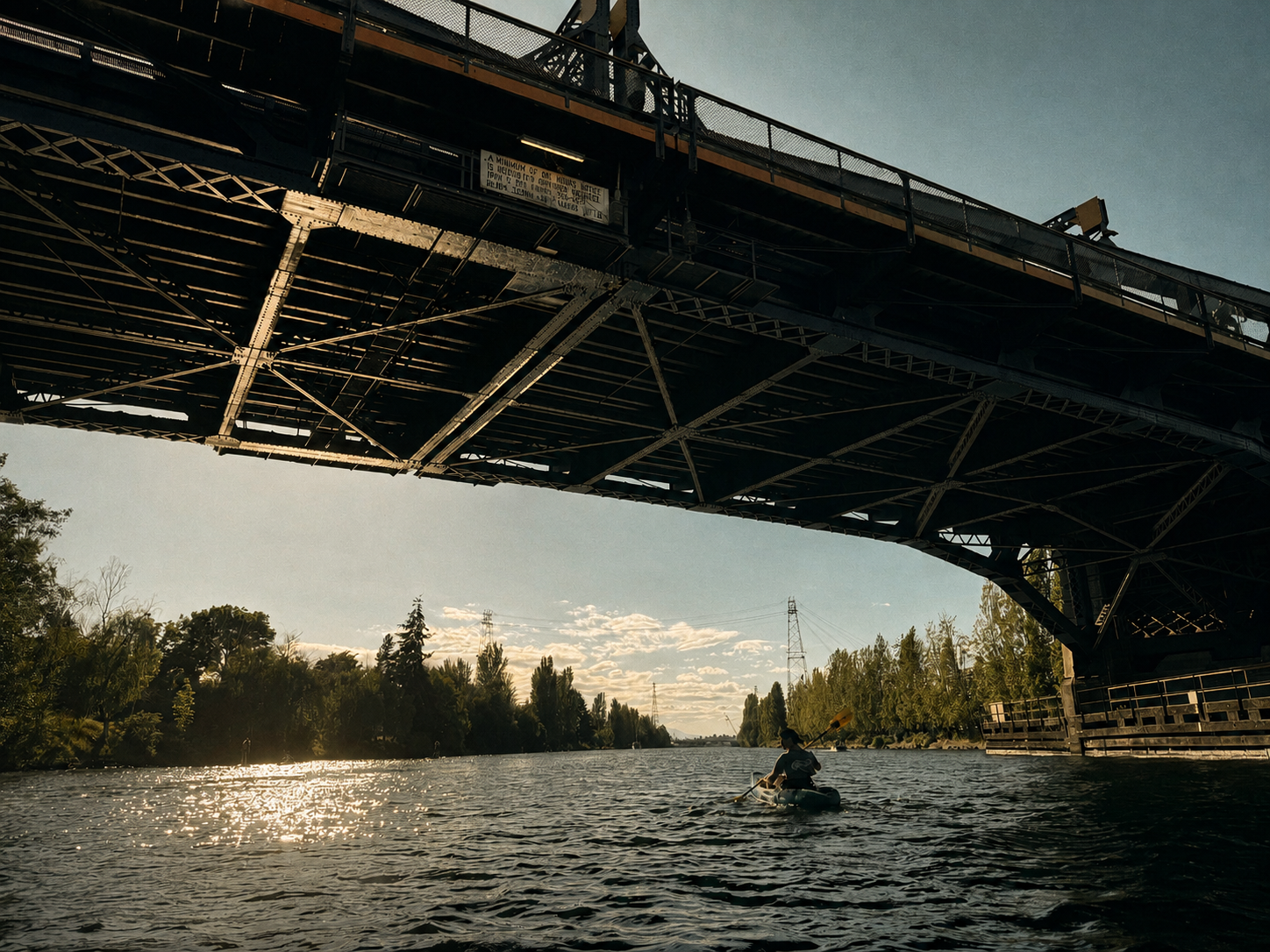
But none of that was on our mind during the Float Rave. So we kept pushing west against the lake’s current, sliding under the Fremont Bridge. We made it to Seattle’s second act, the Fremont shoreline colonized by Google, Adobe, and Salesforce — the enterprise-software waterfront!
It’s becoming more common to hear people refer to this Seattle, and software more broadly, in the past tense. AI is making traditional software development cheaper and easier, and it’s increasingly hard to see enterprise software as defensible businesses. But it’s hard to overstate the importance of Act II to the region: they still represent the engine of our economy, continuing to churn out record earnings and employing more Seattleites than any other industry. Second-act Seattle is the aquifer the third act drinks from.
Just a few blocks east of this cluster, Overland AI occupies a waterfront corporate office. The robotics startup spun out of the University of Washington in 2022, led by robotics professor Byron Boots. The company pioneers offroad autonomy software, and its ULTRA vehicles are now in the hands of the Army, the Marines, and Special Operations Command, and this year the company raised $100 million to keep up with demand.
Overland, like most software-enabled hardware companies in Washington, doesn’t confine itself to Seattle’s city limits. While the company is headquartered in Fremont, it manufactures its ULTRA vehicles in Renton, and tests them across open terrain in eastern Washington.
Act III companies need things software companies never did: high-bay industrial space with cranes and roll-up doors, freight and airfield access through SeaTac and Paine Field, thousands of acres to run a vehicle hard, and deepwater to conduct subsea tests.
The region's aerospace companies work on the same logic, with Starlink, Starcloud, Stoke Space, and Blue Origin mostly operating outside Seattle proper, where the land is more abundant and the buildings are tall enough to hold a rocket.
Back on the lake, we pushed on toward the last two stops: Anduril and Brinc. Anduril, the neo-prime defense startup, long kept its offices in Bellevue, but recently announced it was expanding into the old Foss shipyard on the west canal to build its autonomous surface vessels. There’s irony to its footprint: in Bellevue, Anduril took over several floors of the Skyline Tower that Meta had vacated, which means the empire Palmer Luckey built after Meta fired him is now, quite literally, moving into the space Meta left behind.
Fifteen minutes of paddling against the current brought us to the yard. Foss shut it down in 2021, and Anduril has since spent tens of millions retrofitting it to manufacture and test the vessels: steel-hulled drone warships built at speed and updated like software.
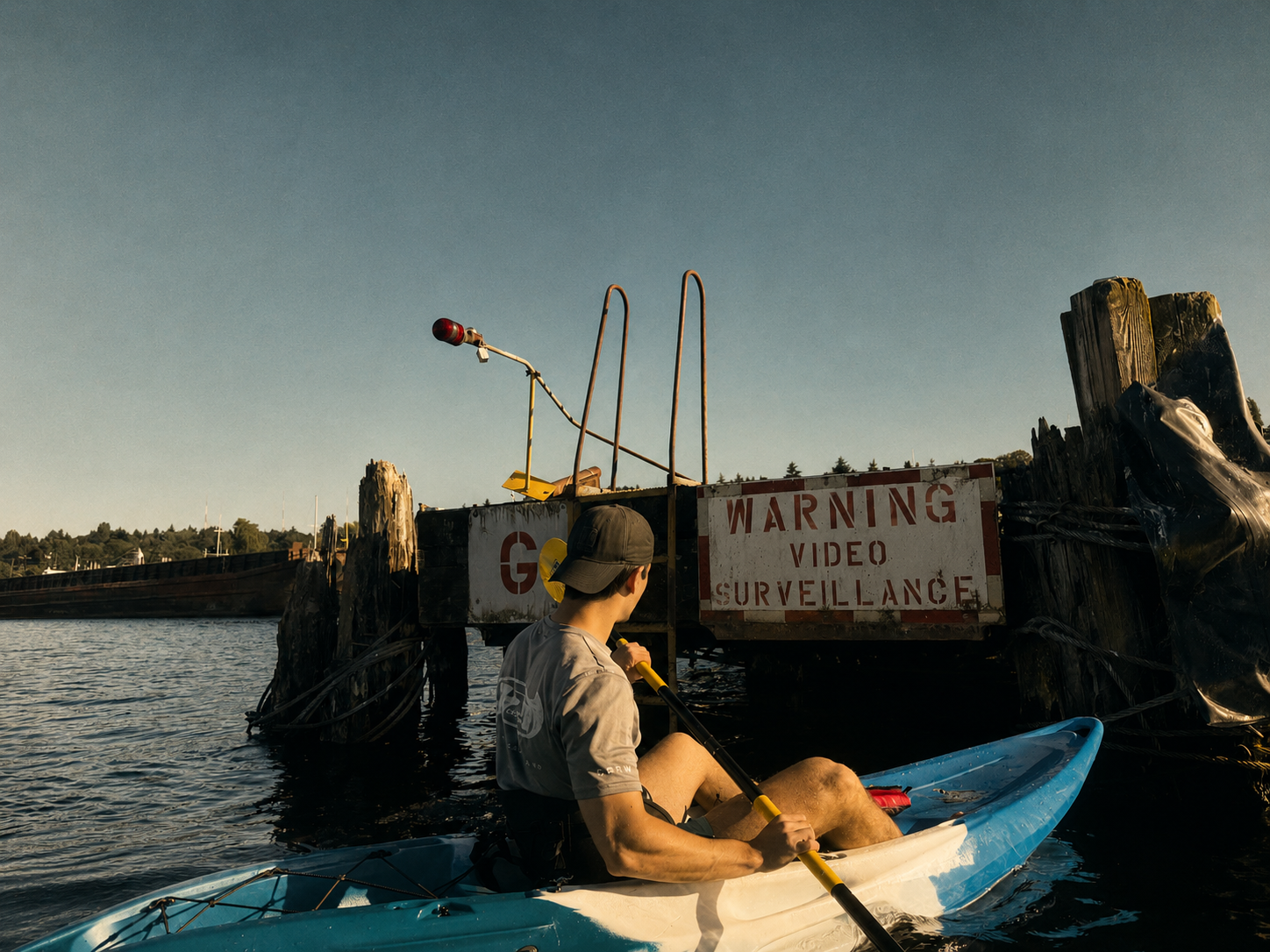
On the day we visited there was not much to see, beyond a sign warning of video surveillance. We asked a man on a nearby houseboat whether he’d noticed any activity from the yard, and he told us he'd never even heard of Anduril or its plans.
That houseboat sat beside what was probably the most consequential building on the lake, and it looked exactly like the derelict sheds on either side of it. Seattle's third act, unlike the second, does not advertise.
Just beyond Foss, our phones told us we were passing Brinc, a Seattle-based drone maker setting up shop inside an old fish cannery. We couldn’t see this one from our kayaks either. The company builds 911-response aircraft for more than nine hundred public safety agencies, and chose this spot in part to recruit talent from recent Amazon Air layoffs.
Read more about Seattle’s Act III case studies
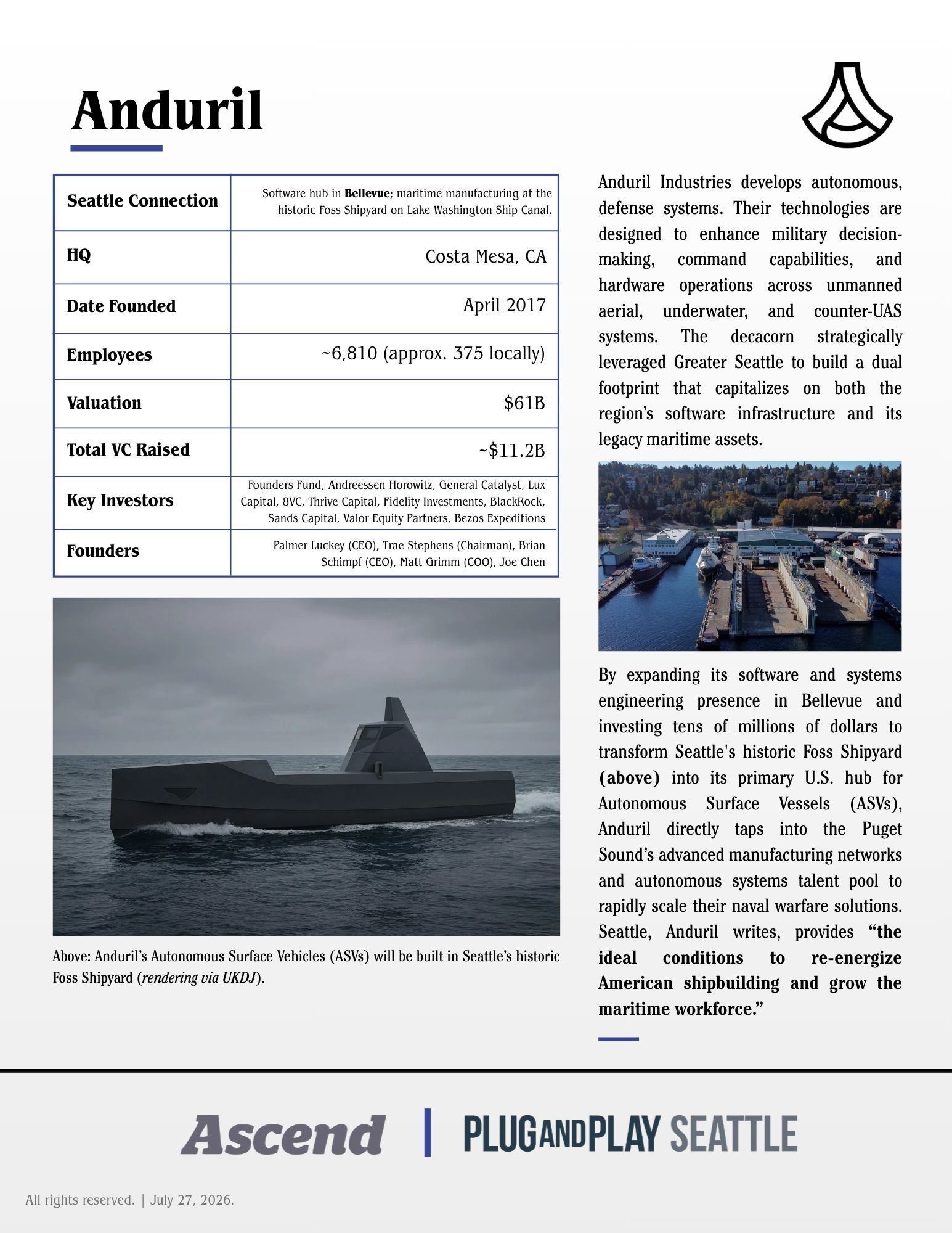
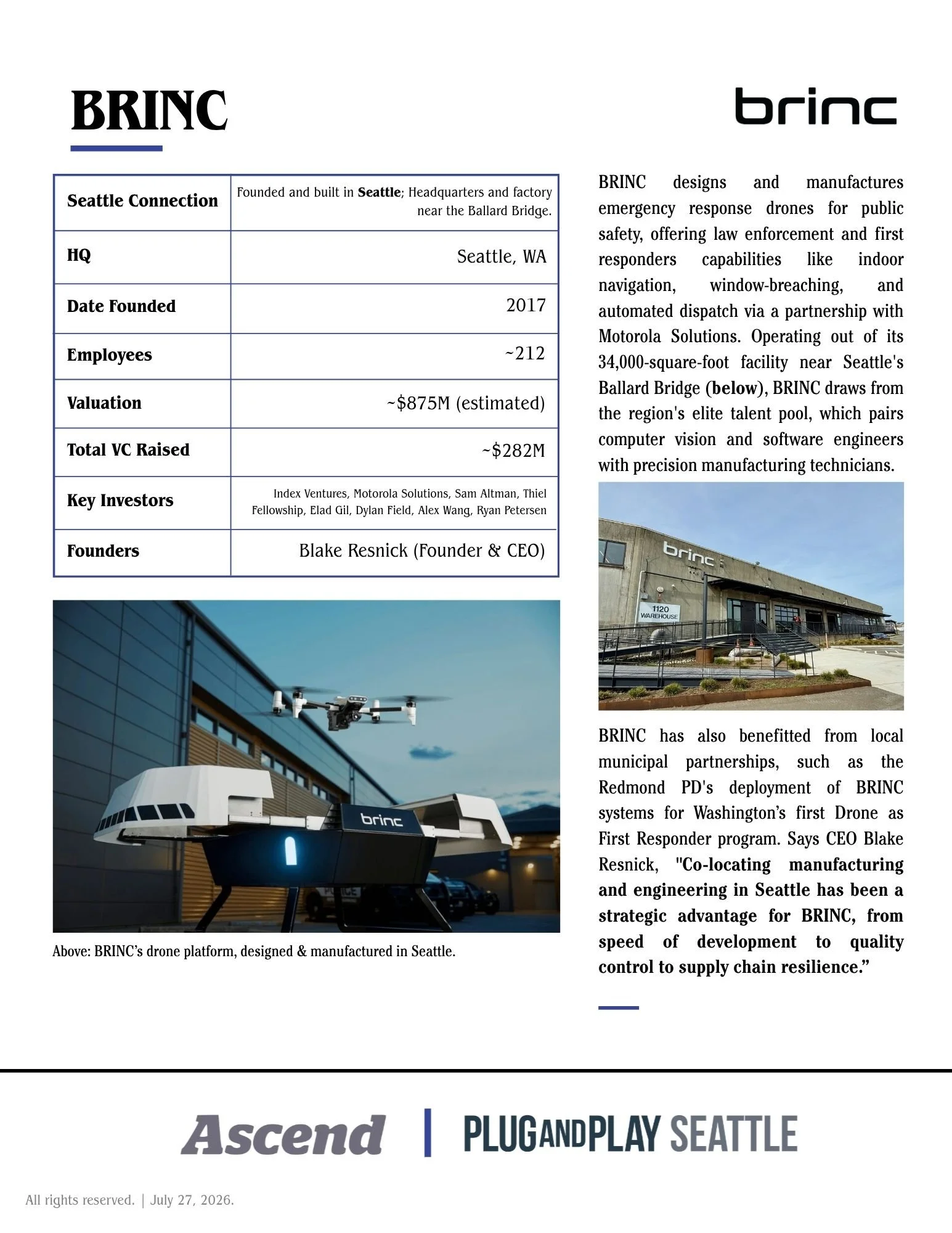
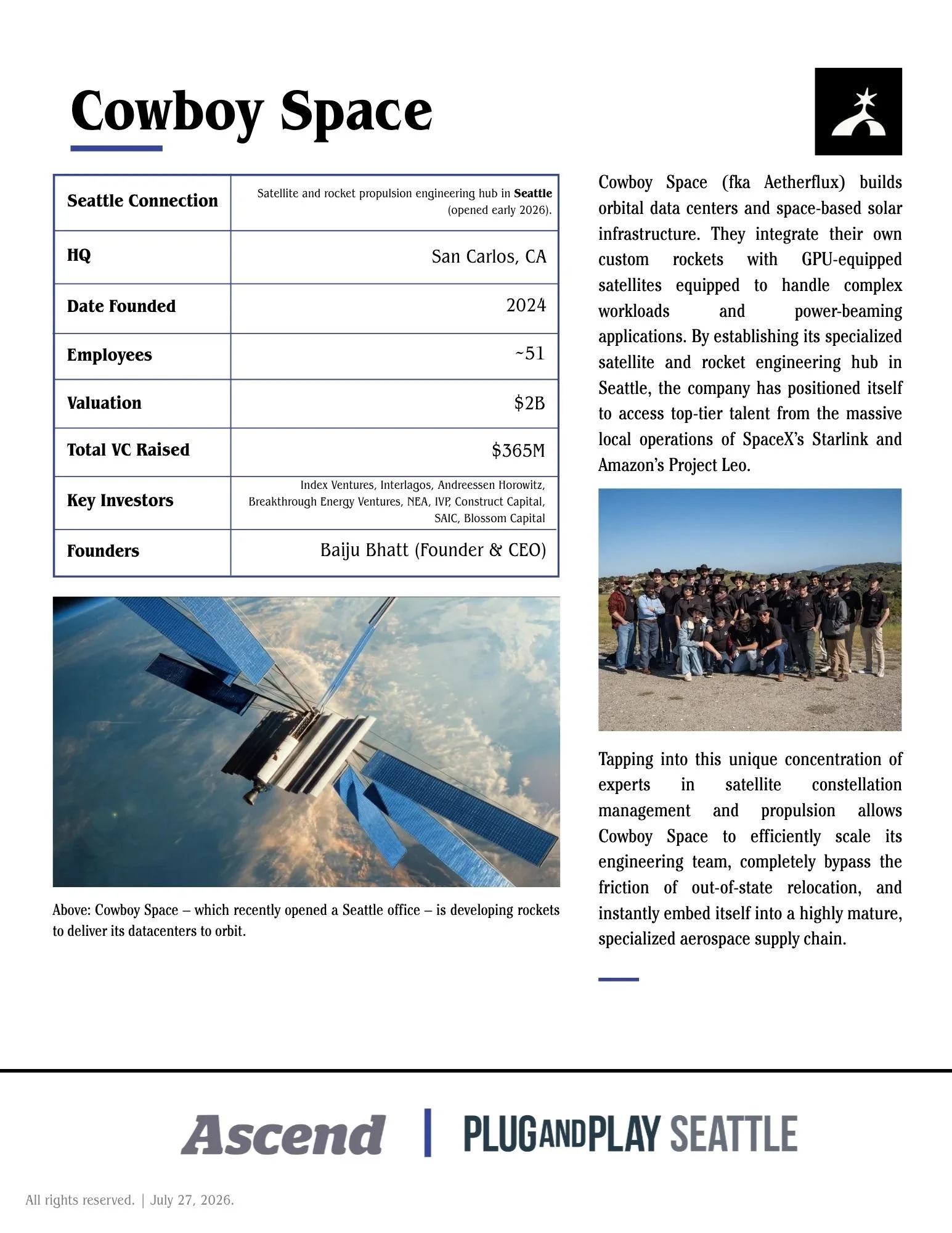
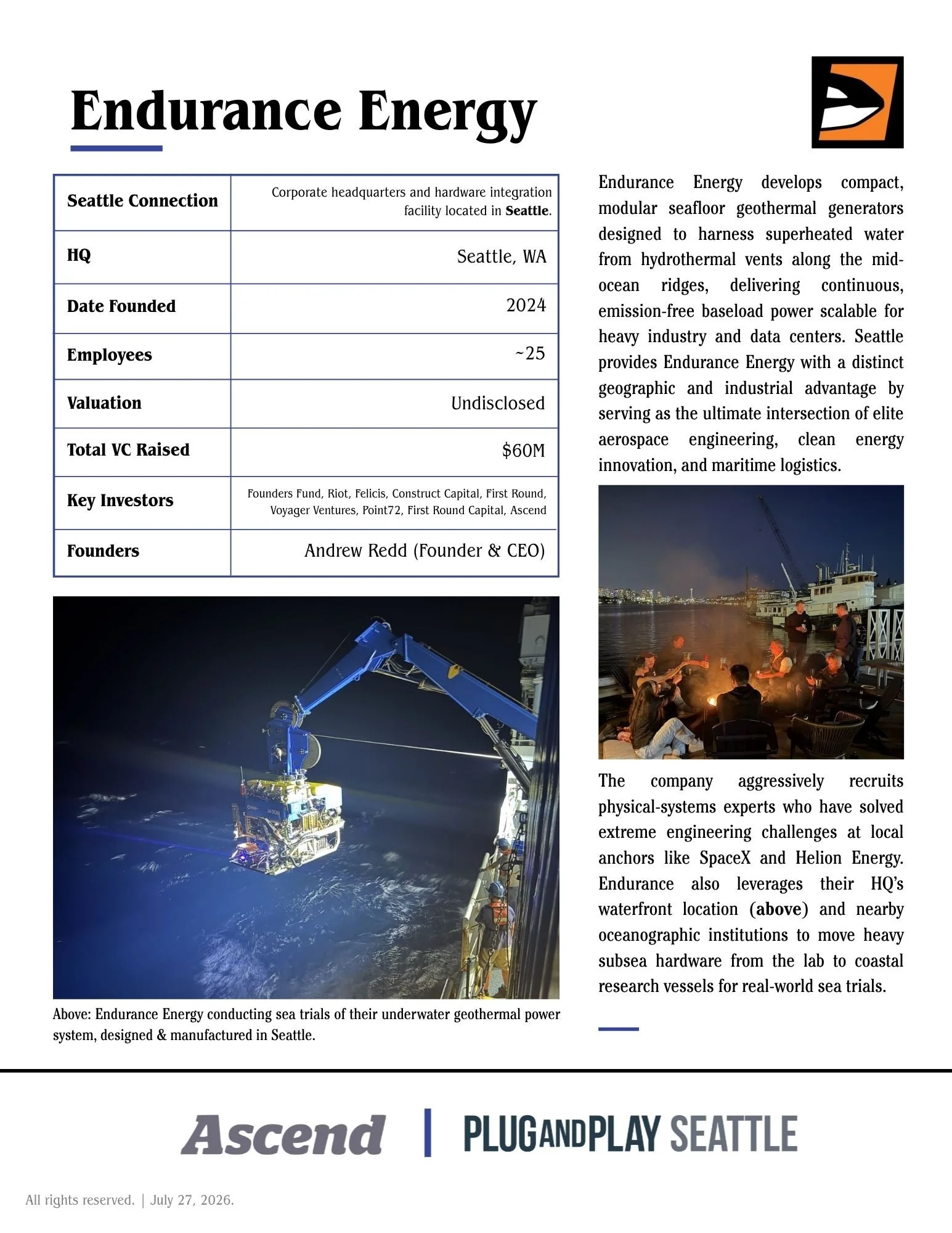
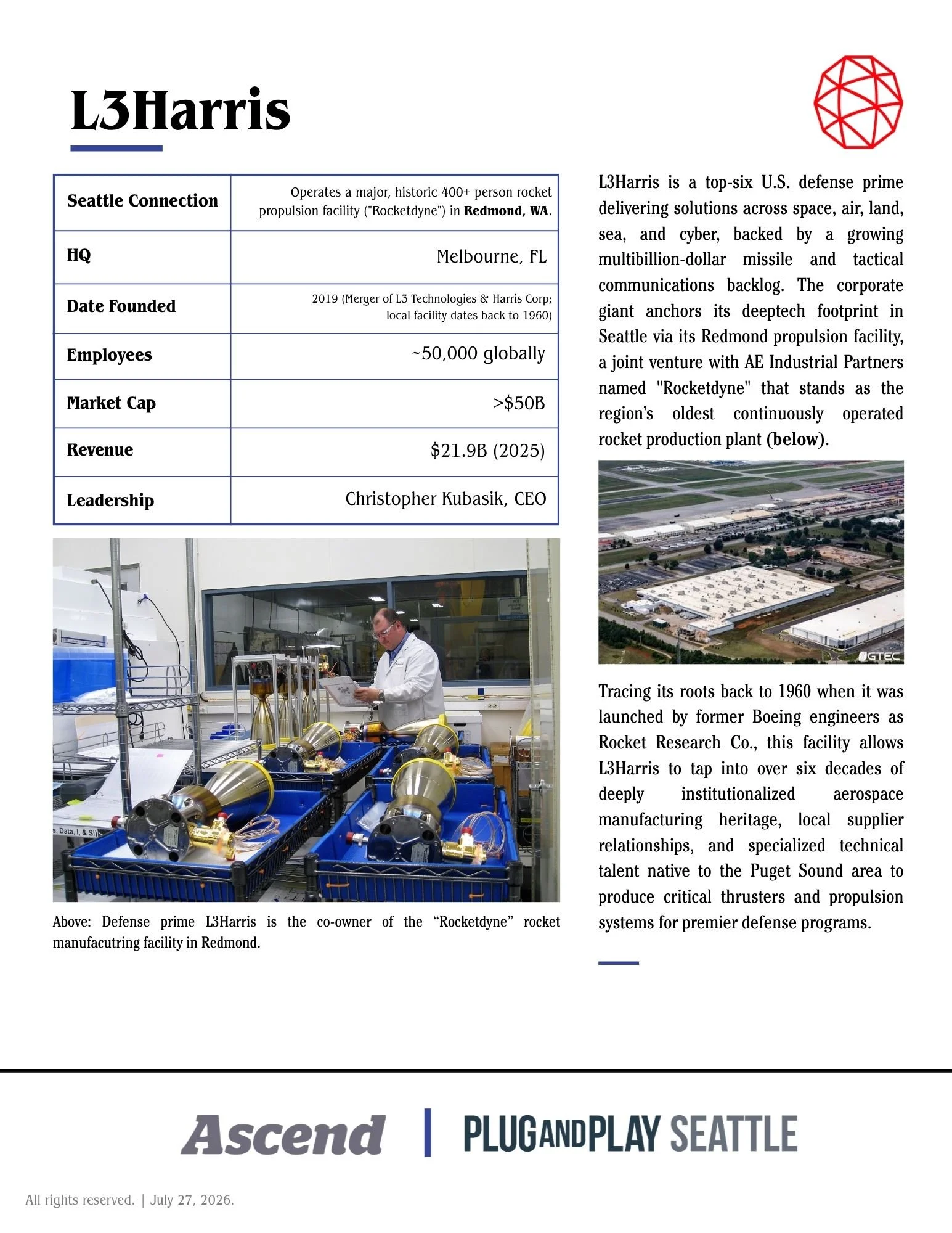
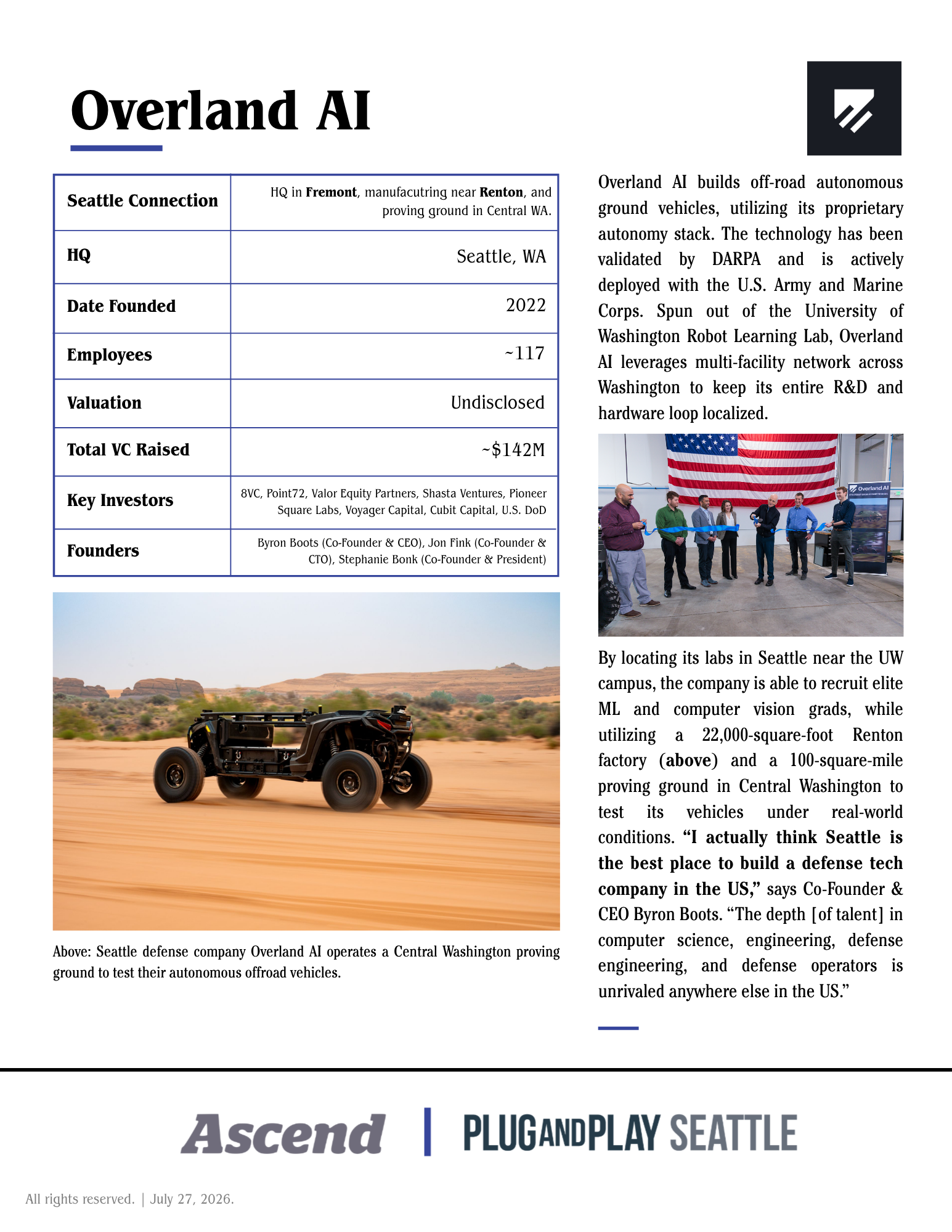
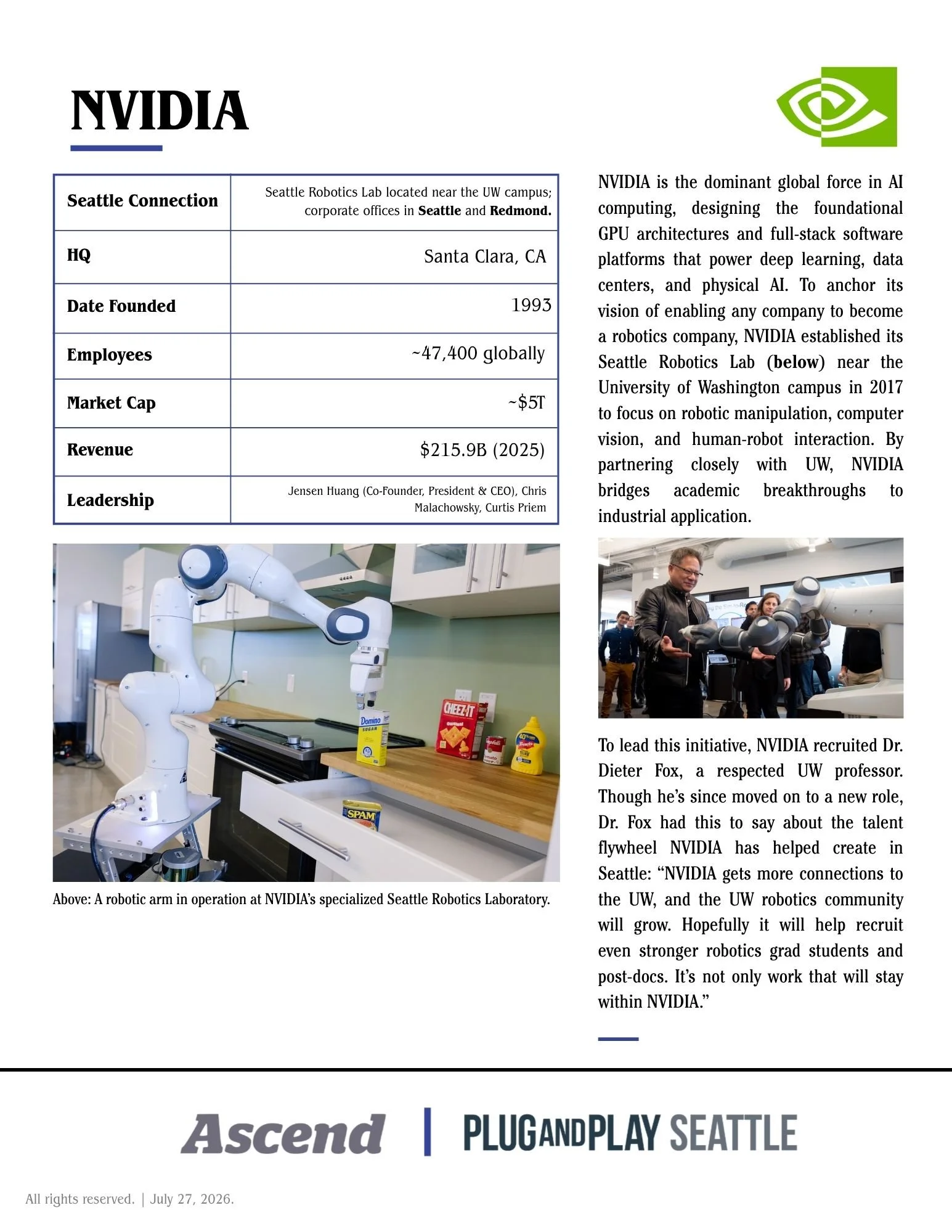
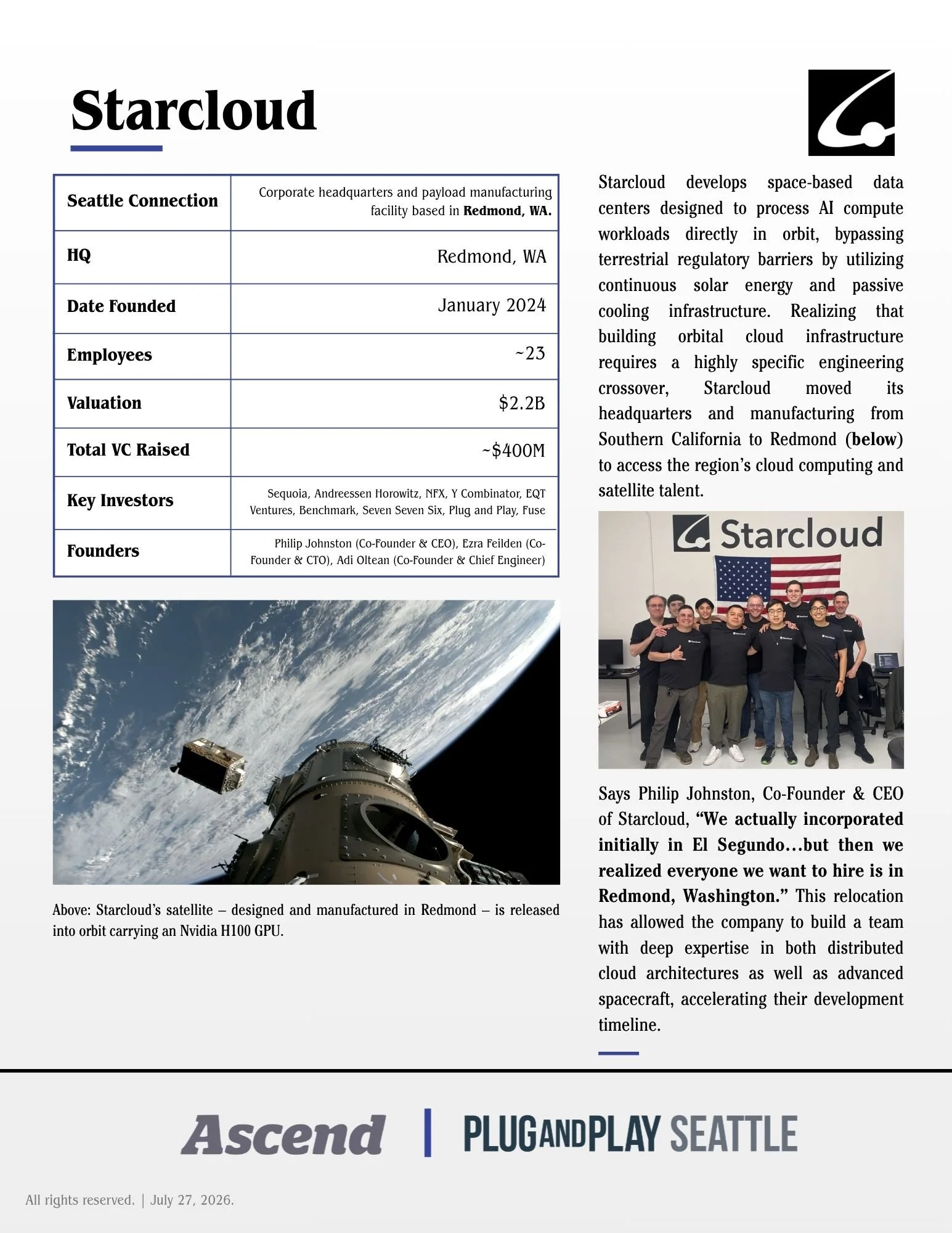
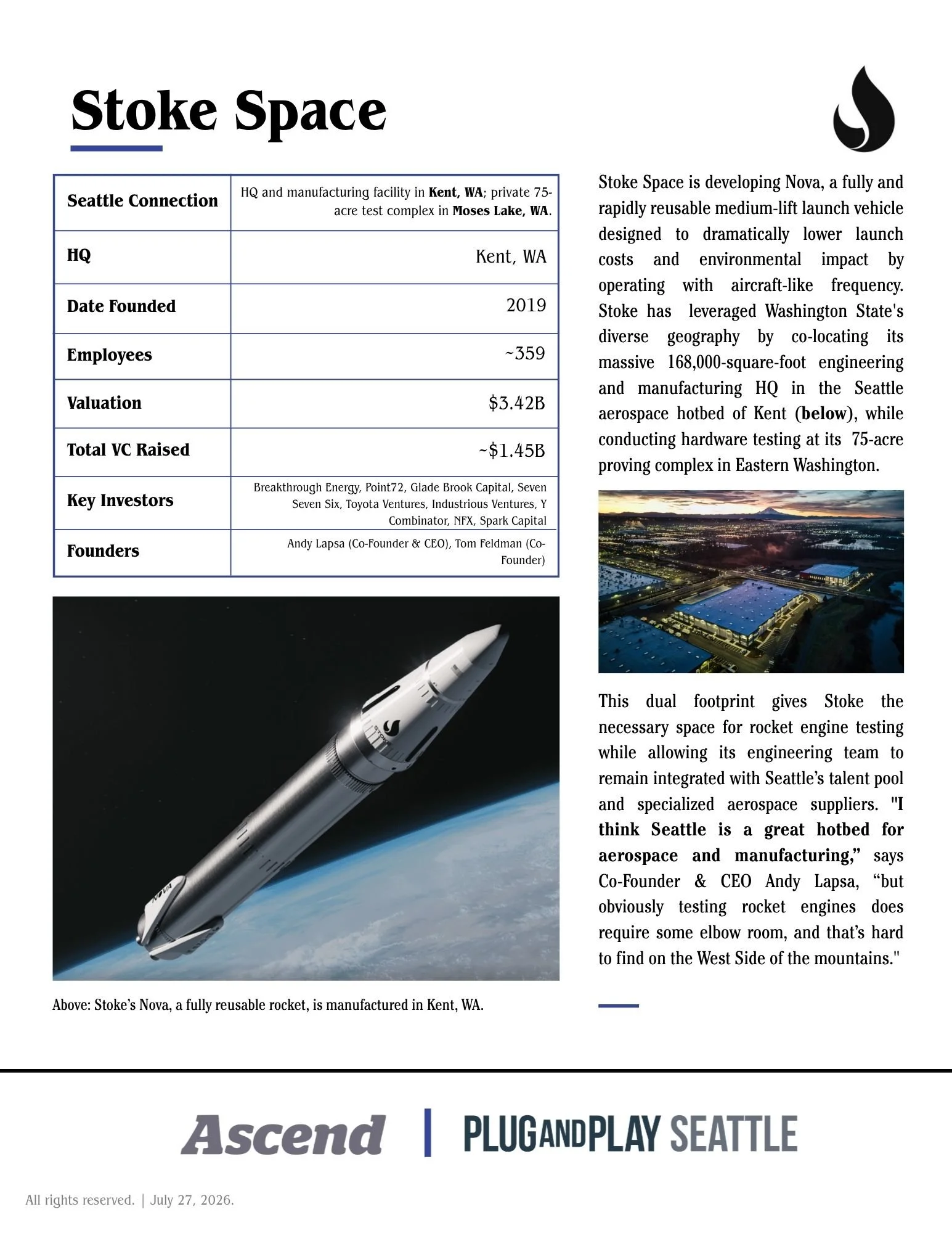
Returning to the dock, the logic of the trip clicked into place. We had left our desks to see these shores because Seattle’s third act is bound to them. In the same way Wall Street stands for finance, The Hill means politics, and Silicon Valley represents software, Lake Union should hold a place on the pantheon, too — synonymous with intelligent machines.
Of course, what we found on the water doesn’t look like anywhere else. Not bro-y like the Gundo. Not rah-rah like the Valley. Lake Union is its own strange thing, as evidence by the float rave happening a few hundred yards away from a team testing a heat exchanger.
Yes, Lake Union offers a rare combination of protected portage, high-bay industrial space, and close access to three major airfields. It’s set against a backdrop of nearby military bases, a leading research university (UW) and research engine (Allen Institute), plus a century of aerospace manufacturing muscle.
But more critical than the infrastructure or institutions is our human talent. Seattle has a higher density of hardware engineers than the Bay Area — aerospace, mechanical, and electrical experts who’ve spent decades building complex systems that live in the physical world rather than on a computer screen. We’re anchored by two of the five largest tech companies on Earth and home to a quarter of all AI engineers in the United States. Act III is the baby of these two worlds, born from the collision of bleeding-edge hardware and software expertise.
We are already in the early stages of creating a world-class physical AI ecosystem, but holding the raw ingredients is not the same as winning the future.
To take this momentum to the next level, the region will need a far greater appetite for risk. Young builders have to choose the thrill and uncertainty of an early-stage startup over the golden handcuffs of Big Tech. Investors have to pull the trigger on early checks for capital-intensive hardware, the kind of world-changing bets that take years to pay off. And founders have to build the kind of tight-knit community where they share space, trade introductions, and lift one another up — the network effects that places like Silicon Valley have long taken for granted.
The second alignment must come from our elected officials. Physical AI companies operate in the real world, and if local leadership wants to anchor the defining economic engine of the next half-century, their policies must actively clear the path for innovation. Founders building intelligent machines should be focusing their energy on solving hard engineering and business problems, not navigating dense bureaucracy, endless permitting regimes, or anti-business tax structures that push ambitious companies elsewhere.
Lake Union is a small lake that tells a big story, one of continuous reinvention, each industrial era building on top of and alongside the last. Our talent, geography, and infrastructure are unmatched; our policy is fixable. We have every reason to believe Seattle’s third act will be its most consequential yet.
We hauled the kayaks out and stood on the dock a while to watch the afternoon light fade across the water. A tug came through the middle at its unhurried four knots, pushing water that Boeing’s first airplane had lifted off in 1916. A seaplane climbed north behind it. And somewhere past the tin sheds, a machine was taking shape that would spend its life on the floor of the ocean.
How can you not be romantic about Lake Union?
Nate Bek is a Senior Associate at Ascend where he focuses on inception-stage deals in defense, robotics, applied AI, and AI infra. He invested in companies like Endurance Energy, Neuramill, and Moondream. Prior to joining Ascend, Nate was a startups and venture capital reporter at GeekWire.
Ben Eisinger serves as Ventures Lead for Plug and Play Seattle where he focuses on early-stage deeptech investments. Prior to joining Plug and Play, Ben worked as a lab researcher, engineer, and operator in the energy industry.
What is Seattle's Third Act?
Seattle's Third Act is a series from Ascend, a Seattle-based pre-seed VC, exploring the startups, founders, and technologies driving the region's next industrial era, from physical AI and robotics to aerospace, defense, and deep tech.
Why is Seattle a deep tech hub?
Seattle combines world-class AI talent with decades of expertise in aerospace, cloud computing, manufacturing, and engineering, making it one of the leading ecosystems for deep tech and physical AI startups.
What does Seattle's Third Act cover?
Seattle startups, Seattle deep tech, Seattle venture capital, Seattle early-stage VC, founder stories, startup funding, physical AI, robotics, AI infrastructure, and the Pacific Northwest innovation ecosystem.